
Only 5 of 37 states list a separate paid resident HIP certification plus any state migratory-bird permit, endorsement, habitat stamp, or upland validation; many use the base license, stamps, or state notes.
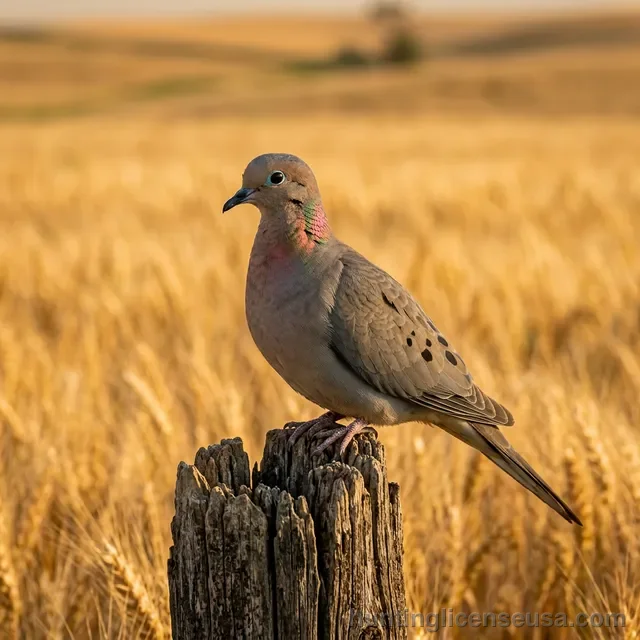
Dove
Dove Hunting Requirements by State: HIP, Permit Costs & No Duck Stamp (2026)
Compare dove hunting license costs, extra permits, and season dates across 37 states.
States 37 Allow dove hunting
Resident Add-On Varies Often base license, stamp, or state notes
Non-Resident Add-On Varies Often base license, stamp, or state notes
Duck Stamp? Not Required Dove uses HIP plus state migratory-bird rules, not the Federal Duck Stamp.
Editorial review
Reviewed by Kevin Luo, editor and verification lead, for Dove permit, tag, stamp, season, and state-comparison guidance.
Updated August 6, 2026
DOVE REQUIREMENTS
Dove Hunting Requirements: HIP, State Permit, No Duck Stamp
Step 1: get the state hunting or small-game license. Step 2: complete HIP certification. Step 3: add any state migratory-bird permit or endorsement; dove does not require a Federal Duck Stamp.
Only 5 of 37 states list a separate paid non-resident HIP certification plus any state migratory-bird permit, endorsement, habitat stamp, or upland validation; many use the base license, stamps, or state notes.
Arizona has the lowest paid non-resident dove entry in this table.
California is the highest paid non-resident dove entry in this table.
True total cost usually means base hunting license + HIP certification plus any state migratory-bird permit, endorsement, habitat stamp, or upland validation + any other stamps, draw applications, access permits, or reporting requirements. Dove migratory-bird add-on costs start around $5 in Arizona and reach $25.46 in California. 32 states require checking state notes because a zero-dollar table entry can mean bundled privileges, no separate listed charge, or a license package rather than a free standalone tag.
Use this species-specific page for dove permits, tags, seasons, and draw context. For state-specific base license rules, open the matching state page. Use the calculator when the next step is estimating the full license and permit cost.
OVERVIEW
Dove Hunting in the United States
A dove hunting license is usually a license stack, not a separate dove tag. Start with the state hunting or small-game license, add HIP certification for migratory birds, then check whether the state requires a migratory bird permit, endorsement, habitat stamp, or upland bird validation. Dove hunting does not require a Federal Duck Stamp; that stamp is for waterfowl hunters, while dove hunters still follow migratory-bird rules such as HIP, shotgun limits, daily bag limits, and state season dates. Texas, Arizona, Georgia, South Carolina, Alabama, Kansas, Mississippi, and other dove states can all be good choices, but the right page depends on the task: use this page for cross-state dove license cost and permit planning, then use the season calendar or a state-specific dove guide for exact date questions such as Georgia dove season 2026-2027.
Dove Hunting License Requirements: No Duck Stamp, But HIP and State Permits Apply
Dove hunting license cost is usually the base hunting or small-game license plus HIP certification and any state migratory bird permit, endorsement, habitat stamp, or upland bird validation. A zero-dollar dove row in the table means no separate dove tag price is listed here; it does not remove the base-license, HIP, or permit requirement, and the state agency may charge an administrative fee for some permit workflows.
Dove hunting does not require a Federal Duck Stamp ($25). The Federal Duck Stamp is required for waterfowl hunters age 16 and older, while dove hunters should focus on the state license, HIP certification, and state migratory-bird requirements. HIP generates survey data about migratory bird harvest that wildlife agencies use for population management.
Many states require a state migratory bird permit or endorsement in addition to the base hunting license. These costs vary significantly: Arizona charges $5 for a Migratory Bird Stamp (required for hunters 18+); Texas charges $7 for the Migratory Game Bird Endorsement; Maryland charges $15 for the Migratory Game Bird Stamp; California's Upland Game Bird Validation costs $25.46 (required for dove as well as pheasant and quail); Pennsylvania's Migratory Game Bird License is $3.97 resident / $6.97 NR. In many southeastern and midwestern states, this table lists no separate dove tag price beyond the base license and HIP workflow, but hunters still need the qualifying license and any migratory-bird requirements.
Equipment rules are strict: dove hunters should use a legal shotgun, and the shotgun must be limited to 3 shells total when hunting migratory birds. Lead shot is legal in many states for dove, but California requires non-toxic shot statewide for all hunting including dove, and some public lands require non-toxic shot regardless of state baseline rules. Hunting hours and opening-day rules are state-specific, so always confirm the current state table before the first hunt.
Dove Season Dates: The September 1 Tradition and Three-Segment Federal Framework
Many states open dove season around September 1, but there is no single national opener. Dove dates sit inside federal migratory-bird frameworks and state-selected split seasons. Kansas, Mississippi, Texas, South Carolina, North Carolina, and many Great Plains or Southern states often start on or near September 1, while Georgia, Alabama, and Florida can use later openers or different segment structures. Use the hunting seasons calendar for broad 2026-2027 timing, then this dove page for the license, HIP, permit, and bag-limit stack.
September 1 is the traditional dove hunting opener across much of the South and Southwest, but states still publish the final legal dates, shooting hours, and segment structure. Georgia-specific date questions should route to the Georgia dove season guide at Georgia Dove Season; this national dove page is for comparing the license, HIP, state permit, and bag-limit workflow across states.
The three-segment structure allows states to spread their season days across the fall and winter. States like Texas, Alabama, Georgia, South Carolina, and Louisiana run all three segments from September through January, providing the longest dove hunting opportunities. Midwestern states like Iowa and Ohio run single shorter seasons (September–October or September–November) that correspond with dove migration through the region. Northern states like Michigan, Minnesota, Wisconsin, and Pennsylvania have shorter seasons because migratory doves pass through rather than wintering. Eurasian collared-doves — an invasive non-native species — are not subject to federal migratory bird regulations and can be hunted year-round with no bag limit in most states.
White-winged dove planning matters most in the southern tier. Texas and Arizona both have strong white-winged dove opportunity, but the hunter still needs the correct base license, HIP certification, state migratory-bird item, and current zone or segment dates. New Mexico's southern units can also hold white-winged doves in September. White-winged doves are larger than mourning doves and are most associated with the southern border states, though populations continue to expand northward.
Kansas dove season 2026, dove season Kansas 2026, Mississippi dove season 2026, and MS dove season 2026 all work best as season-plus-license checks. Confirm the state split season first, then check the base license, HIP certification, public-field rules, shot restrictions, and any state migratory-bird item before choosing a field.
Where to Hunt Doves: Texas, the South, and Reading the Landscape
Texas is the largest dove destination in the country and gives hunters multiple zone tables to work with from the Panhandle to South Texas. South Texas is especially important for white-winged doves, while agricultural fields, grain sorghum, sunflower, stock tanks, and brush-country roosts can all shape flight lines. For non-residents, start by checking the current Texas small-game license path, $7 migratory bird endorsement, HIP certification, and the zone table before choosing dates. For an Arizona dove hunting license, plan around the base hunting license, Arizona's $5 Migratory Bird Stamp, HIP, and the current early or late season segment. Arizona is another strong white-winged dove state, with irrigated agriculture near Phoenix, Yuma, and southern river valleys creating reliable early-season activity.
The Southeast corridor — South Carolina, Georgia, Alabama, and North Carolina — provides excellent mourning dove hunting with managed public dove fields. State wildlife agencies in the Carolinas and Georgia prepare and plant designated fields specifically for dove hunting, often with defined shooting positions and organized opening-day events. These fields attract birds with millet, sunflower, and browntop millet plantings. South Carolina's managed WMA dove fields and Georgia's public dove fields are among the most productive public-access dove hunting opportunities in the eastern US. Kansas and Oklahoma represent the top Great Plains states, with sunflower and grain sorghum agriculture creating ideal habitat across the central flyway.
Field selection drives dove hunting success more than any other factor. Doves feed primarily in harvested grain fields (corn, sunflower, millet, milo), water at stock ponds and stock tanks during the heat of the day, and roost in trees along field edges and powerlines. The most productive setups position hunters at water sources during the midday heat or at field edges where birds funnel from roost to feed. Scouting the week before season to observe flight patterns — particularly evening roost flights — is essential. Doves are habitual and will return to the same fields daily as long as food is present. A freshly disced or harvested field with remaining seed on the ground draws birds reliably.
REQUIREMENTS
What Dove Hunters Need Beyond the Base License
Tags, extra permits, stamps, and draw rules that commonly apply.
Dove hunting generally requires a valid state hunting or small-game license, HIP certification for migratory bird hunting, and any state migratory bird permit or endorsement that applies. Dove hunting does not require a Federal Duck Stamp; that stamp is for waterfowl hunters. Common add-ons include Arizona's $5 Migratory Bird Stamp, Texas's $7 Migratory Game Bird Endorsement, Maryland's $15 Migratory Game Bird Stamp, California's $25.46 Upland Game Bird Validation, and Pennsylvania's Migratory Game Bird License. Shotguns must be legal for migratory-bird hunting and limited to 3 shells total. Non-toxic shot may be required on public lands, and California requires non-toxic shot statewide. Most states use a 15-dove daily limit for mourning and white-winged doves combined, but final bag limits, shooting hours, and field rules come from the current state regulations.
Plan the Full Purchase
Start with the base hunting license, then layer in the species tag, migratory bird permit, draw application, or season-specific stamp that applies to your dove hunt.
SOURCES
Dove Hunting Official Sources
Listed sources support HIP requirements, federal migratory-bird context, and selected Texas and Georgia dove examples. They do not verify every state row, every permit amount, every season segment, every public-field rule, or every late emergency update without checking the current state agency page.
COST COMPARISON
Dove Hunting License Cost by State
Compare dove tag and permit fees across 37 states for the 2026 season.
TOP PICKS
Best States for Dove Hunting
Expert-recommended destinations for dove hunters.
#1
Texas
Texas is the largest dove destination in the country, with strong mourning dove and white-winged dove opportunity across agricultural country, stock tanks, and South Texas brush. The state uses North, Central, and South Zone date tables, so hunters should choose the zone first, then confirm the current TPWD season dates, HIP certification, and $7 Migratory Game Bird Endorsement before buying shells or booking access.
Large dove harvest, 3-zone date table, $7 migratory bird endorsement
#2
Arizona
Arizona is the #2 dove state and a strong destination for white-winged dove hunting. The early season (Sep 1-15) produces fast action with both mourning and white-winged doves near water sources and agricultural fields. The late season (Nov-Jan) extends the opportunity. A $5 Migratory Bird Stamp is the listed dove-specific add-on, and hunters should still confirm the current license path before buying. Phoenix and Tucson metro areas have surprisingly productive public dove hunting.
#2 state for dove, excellent white-winged dove, $5 Migratory Bird Stamp
#3
South Carolina
South Carolina has one of the strongest dove hunting traditions in the Southeast, with September 1 opening day being a cultural event. Three season segments extend from September through January 31. The state manages excellent public dove fields, and private land hunting in agricultural areas produces outstanding results. Dove hunters should budget the basic hunting license plus the required migratory bird permit workflow.
Sep 1 opening day tradition, 3 segments through Jan 31, managed public fields
#4
Georgia
Georgia offers excellent dove hunting with three season segments from September through January. The state manages numerous public dove fields that provide quality hunts. The GA Waterfowl Migratory Bird License is the HIP credential for dove hunters 16+. The current WRD flyer is the final source for segment dates, shooting hours, and field rules.
3 segments Sep–Jan, excellent managed public dove fields
#5
Kansas
Kansas is a top dove state in the Great Plains, with vast sunflower fields creating ideal habitat. The season runs September through late November with 15-bird daily limits. Kansas's Walk-In Hunting Access (WIHA) program provides significant public hunting opportunity. The combination of dove + upland bird hunting makes Kansas a fall bird hunting destination.
Sunflower fields, Sep–Nov season, WIHA public access
SEASONS
Dove Hunting Season Dates by State
Season dates, weapon types, and regulations at a glance.
FAQ
Frequently Asked Questions About Dove Hunting Licenses
Do you need a Federal Duck Stamp for dove hunting?
No. Dove hunting does not require a Federal Duck Stamp. The Federal Duck Stamp is for waterfowl hunters age 16 and older. Dove hunters still need the state hunting or small-game license, HIP certification, and any state migratory bird permit, endorsement, habitat stamp, or upland bird validation that applies.
What is the true total cost to hunt doves?
The true total cost for dove hunting is the base hunting license plus HIP certification and any state migratory bird permit, migratory bird endorsement, or upland bird validation. A zero-dollar dove row means no separate dove tag price is listed here, not that the license path is optional. Residents often land around $10-$50; non-resident hunting licenses can run $100-$315 depending on the state. Texas is one clear example at $25 for the resident license plus a $7 migratory bird endorsement, while dove hunting still does not require a Federal Duck Stamp.
When does dove season start in 2026?
Many dove seasons start on or near September 1, but there is no single national 2026 opener. Dove dates depend on the federal migratory-bird framework plus each state's split-season selection. Kansas, Mississippi, Texas, and many Southern or Great Plains states often open early, while Georgia, Alabama, and Florida can use later or zone-specific structures.
Do Texas dove hunters need HIP certification?
Yes. Texas dove hunters should expect the Texas hunting license path, the $7 Migratory Game Bird Endorsement, and HIP certification for migratory bird hunting. HIP certification is separate from the Federal Duck Stamp question; dove hunting does not require the Federal Duck Stamp.
Where should I check Georgia dove season dates?
Use the <a href="/guides/dove-season/georgia/">Georgia-specific dove season guide</a> or Georgia WRD for final Georgia dates, shooting hours, GA Waterfowl Migratory Bird License/HIP rules, and field requirements. This national dove page is better for comparing the license stack across states: base license, HIP certification, state migratory bird item, and bag-limit basics.
What is the daily bag limit for doves?
The daily bag limit is 15 doves in most states (mourning doves + white-winged doves combined). The possession limit is typically 45 (3x daily bag). Eurasian collared-doves are an invasive species with no bag limit, no closed season, and no federal protection — they can be taken year-round in unlimited numbers in most states.
What shot size is best for dove hunting?
The most popular shot sizes for dove hunting are #7½ and #8, which provide excellent pattern density at typical dove hunting ranges (20-40 yards). #9 shot works well for closer shots. Most dove hunters use 12-gauge or 20-gauge shotguns with improved cylinder or modified chokes. Remember: shotgun magazine capacity is limited to 3 shells (plug required), and lead shot is prohibited on some public lands and entirely in California.
What is the difference between mourning doves, white-winged doves, and Eurasian collared-doves?
Mourning doves are the most common species, found in all 48 contiguous states, with a distinctive cooing call and long pointed tail. White-winged doves are larger with white wing patches, found primarily in TX, AZ, NM, CA, and FL. Eurasian collared-doves are an invasive species (no bag limit, no closed season) identified by a black collar on the back of the neck — they're larger than mourning doves and can be taken year-round.
What is the best state for dove hunting?
Texas is usually the first state to compare because it has large dove harvest, multiple zones, and strong mourning dove and white-winged dove opportunity. Other strong choices include Arizona for white-winged dove, South Carolina and Georgia for managed public fields, Kansas for sunflower and grain fields, plus Alabama, Mississippi, and California depending on access and season timing.
Is dove hunting good for beginners?
Dove hunting is considered one of the best hunts for beginners. Reasons: (1) Minimal equipment needed — just a shotgun, shells, and camo/earth-tone clothing; (2) No special skills required — sit in a field and shoot; (3) Social activity — multiple hunters share a field; (4) High volume — 15-bird daily limits provide lots of shooting; (5) Short hunt — 2-4 hours typically; (6) Affordable — license + shells is often under $50 total; (7) Delicious eating — dove is considered one of the finest game meats.