
Only 1 of 22 states list a separate paid resident small-game license, pheasant stamp, habitat stamp, or public-land authorization; many use the base license, stamps, or state notes.
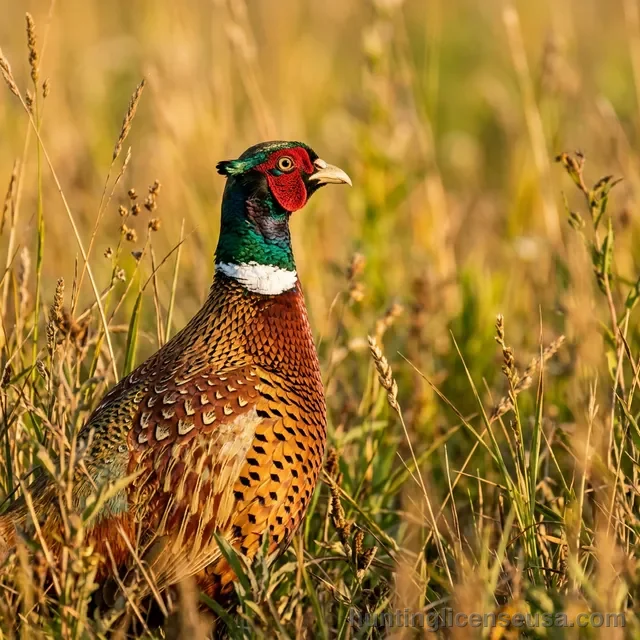
Pheasant
Pheasant Hunting License: Best States, Season Dates & Costs (2026)
Compare pheasant hunting license costs, extra permits, and season dates across 22 states.
States 22 Allow pheasant hunting
Resident Add-On Varies Often base license, stamp, or state notes
Non-Resident Add-On Varies Often base license, stamp, or state notes
Draw Required None OTC tags available
Editorial review
Reviewed by Kevin Luo, editor and verification lead, for Pheasant permit, tag, stamp, season, and state-comparison guidance.
Source coverage reviewed August 17, 2026
LICENSE PATH ANSWER
Pheasant License & Stamp Cost
Use this before the full state table when you need the likely pheasant small-game license, stamp, habitat fee, or public-land budget.
Only 1 of 22 states list a separate paid non-resident small-game license, pheasant stamp, habitat stamp, or public-land authorization; many use the base license, stamps, or state notes.
Michigan has the lowest paid non-resident pheasant entry in this table.
True total cost usually means base hunting license + small-game license, pheasant stamp, habitat stamp, or public-land authorization + any other stamps, draw applications, access permits, or reporting requirements. Pheasant has a separate listed non-resident small-game license, pheasant stamp, habitat stamp, or public-land authorization entry around $15 in Michigan; many other rows depend on the base license, stamps, or state notes.
Use this species-specific page for pheasant permits, tags, seasons, and draw context. For state-specific base license rules, open the matching state page. Use the calculator when the next step is estimating the full license and permit cost.
OVERVIEW
Pheasant Hunting in the United States
Pheasant hunting is a cherished American tradition centered in the Great Plains and Midwest, representing one of the most accessible and social forms of upland bird hunting. The ring-necked pheasant, introduced from China in the late 1880s, thrives in agricultural landscapes with a mix of cropland, grassland, wetland edges, and Conservation Reserve Program (CRP) cover. South Dakota is the best-known pheasant destination, attracting substantial non-resident hunting interest and supporting a major upland-bird travel economy. Other strong states include Kansas, Iowa, Nebraska, North Dakota, and Minnesota. Unlike big game hunting, pheasant hunting usually does not require an expensive species tag; it is commonly covered through the small-game or general hunting license path, though some states require an additional pheasant stamp, habitat stamp, or public-land authorization. The season generally runs from October through January, with opening weekends in states like South Dakota creating a festival-like atmosphere. A quality bird dog (Labrador Retriever, German Shorthaired Pointer, or English Springer Spaniel) is highly useful, as pheasants prefer to run rather than fly. In the main ring-necked pheasant seasons listed here, hunters should confirm sex, species, and area rules before assuming hen harvest is legal.
Pheasant Hunting License Requirements: Base License, Stamps, and State-Specific Add-Ons
Pheasant hunting is one of the more license-accessible forms of upland hunting in the US. In many states, no separate pheasant tag is required because ring-necked pheasant access is covered through the small-game or general hunting license path. Resident small game licenses typically cost $10–$40, and non-resident small game licenses range from $60–$150 in the top pheasant states. The key exception is South Dakota, where the NR small game license ($142) covers two specific 5-day hunting periods rather than an unlimited season — NR hunters must select which periods they want at the time of purchase.
Several states require additional stamps or endorsements on top of the base license. Michigan requires a Pheasant Stamp ($15) for hunting on public land (private land is exempt). Minnesota requires a Pheasant Stamp ($7.50). Wisconsin requires a Pheasant Stamp ($7.25). Oregon requires an Upland Bird Stamp ($9). Iowa, Nebraska, Illinois, and Colorado require habitat or conservation stamps ($12–$25) that fund grassland and upland habitat programs. California requires a Upland Game Bird Stamp. These stamps are usually inexpensive but are mandatory and can result in a citation if not purchased before hunting.
Hunter education rules vary by state and by the hunter's age or previous-license history. Many states accept out-of-state hunter education certificates through reciprocity, but hunters should confirm the current rule before traveling. Pheasant hunting is generally not a big-game-style draw application, yet license, stamp, stocked-area, and access rules still vary by state and property type. A Federal Duck Stamp is not required for pheasant hunting, but state upland, habitat, or public-land permits may apply. Pheasant hunters must be able to identify legal birds in flight and should confirm the current sex and species rules for the state and area they plan to hunt.
Top Pheasant States: South Dakota, Kansas, North Dakota, Iowa, and Nebraska
South Dakota is the best-known pheasant travel destination in North America and remains the anchor state for many upland trips. The season opens the third Saturday of October (October 17 in 2026) and runs through January 31. GFP's 2025 pheasant economics table lists $304.5 million in total pheasant-hunting spending, 82,574 nonresident hunters, and 1,351,081 pheasants harvested. The Game Production Areas (GPA) program and other public-access options provide walk-in opportunities, while private-land and guided hunts remain common. The traditional daily limit is 3 roosters with a 15-bird possession limit.
Kansas is another major wild-pheasant state, especially across the western half of the state. The state's Walk-In Hunting Access (WIHA) program gives hunters a public-access path on enrolled private land, but acreage, maps, and local conditions should be checked for the current season. For 2026-2027, Kansas lists a Nov 14-Jan 31 pheasant season with a 4-cock daily limit. NR small game license costs $97.50. North Dakota's PLOTS (Private Lands Open to Sportsmen) program similarly provides walk-in access, with southwest and south-central regions commonly used for trip planning.
Iowa's northwest corner is a common planning area when Conservation Reserve Program (CRP) grasslands, roadside counts, and winter survival point to stronger bird numbers. Nebraska's southwest Panhandle is another common option, with the Open Fields and Waters (OFW) program providing walk-in private land access. Nebraska's season runs late October through January 31 with a 3-rooster daily limit. NR small game in Nebraska is $97. Minnesota's southwest counties are often part of upland trip planning but require the $7.50 Pheasant Stamp.
Habitat, Dogs, and Season Timing for Pheasant Success
Ring-necked pheasants thrive in an agricultural matrix of row crops (corn, soybeans, winter wheat) interspersed with grassland cover. Conservation Reserve Program (CRP) fields — enrolled farmland converted to native grass mixes under USDA contracts — are the single most important habitat element in the Great Plains pheasant range. CRP acres have fluctuated significantly over decades based on federal enrollment levels, and pheasant population cycles closely track CRP acreage in each state. Counties with large, well-distributed CRP fields adjacent to unharvested corn or milo produce the most consistent bird numbers.
A trained bird dog is practically essential for successful pheasant hunting. Pheasants are notorious runners — they prefer to use their legs through heavy cover rather than flush. Without a dog, hunters miss the majority of birds that run ahead rather than holding for a shot. Flushing dogs (Labrador Retrievers, English Springer Spaniels) work cover close to the gun and force birds to flush when pressured. Pointing breeds (German Shorthaired Pointer, English Pointer, Vizsla) locate and hold birds at point, giving hunters time to position for the flush. Both styles are effective; pointing breeds tend to range wider and cover more ground per hour.
Season timing matters significantly for pheasant hunting. Opening weekend in South Dakota is a cultural event with high hunting pressure but also peak bird numbers before harvest-season field activity disperses birds. By late October and November, corn harvest concentrates remaining birds in standing fields, unharvested edges, and CRP. December and January hunting in cold-weather states can be excellent as birds bunch into larger groups in cattail sloughs, shelterbelts, and creek drainages for thermal cover. Late-season birds are hunter-educated and challenging, requiring patient slow walking and good dogs. Snowfall often improves late-season hunting by concentrating birds in limited cover areas.
REQUIREMENTS
What Pheasant Hunters Need Beyond the Base License
Tags, extra permits, stamps, and draw rules that commonly apply.
Pheasant hunting is commonly covered through the small-game or general hunting license path, with no separate pheasant tag in many states. However, several states require additional stamps: Michigan ($15 Pheasant Stamp for public land), Minnesota ($7.50 Pheasant Stamp), Wisconsin ($7.25 Pheasant Stamp), Oregon ($9 Upland Bird Stamp), and various habitat/conservation stamps ($12–$25). Shotguns with #4–#6 shot are standard. In the main ring-necked pheasant seasons listed here, rooster-only rules are common, but hunters should confirm the current state species, sex, stocked-area, and public-land rules before hunting. On certain public lands, non-toxic shot may be required. Dogs are highly recommended and culturally integral to pheasant hunting, with pointing breeds (German Shorthaired Pointer, English Pointer) and flushing breeds (Labrador, Springer Spaniel) being most popular. Hunter education requirements depend on age, state, and license history. South Dakota non-residents must purchase a license that covers specific 5-day hunting periods.
Plan the Full Purchase
Start with the base hunting license, then layer in the species tag, migratory bird permit, draw application, or season-specific stamp that applies to your pheasant hunt.
SOURCES
Pheasant Hunting Official Sources
Listed sources support selected South Dakota license/statistics, Kansas season, North Dakota pheasant, and USDA CRP habitat examples. They do not verify every state row, every stamp amount outside selected examples, destination rankings, dog/gear advice, or a full-table date.
COST COMPARISON
Pheasant Hunting License Cost by State
Compare pheasant tag and permit fees across 22 states for the 2026 season.
TOP PICKS
Best States for Pheasant Hunting
Expert-recommended destinations for pheasant hunters.
#1
South Dakota
South Dakota is the best-known pheasant destination for many traveling upland hunters. GFP's 2025 pheasant economics table lists 82,574 nonresident hunters, 1,351,081 pheasants harvested, and $304.5 million in total pheasant-hunting spending. Opening weekend remains a cultural event, and both public access programs and private-land hunts shape the trip plan. NR small game license ($142) covers two 5-day hunting periods.
GFP table: 82,574 NR hunters, 1,351,081 birds, $304.5M total spending
#2
Kansas
Kansas is a major wild-pheasant option across much of the western half of the state. Walk-In Hunting Access (WIHA) gives hunters a public-access path on enrolled private land, while the 2026 season runs Nov 14 through Jan 31 and the regular daily limit is 4 cock pheasants. Treat access acreage, maps, and county conditions as current-year planning inputs rather than fixed claims.
Nov 14-Jan 31 season with 4-cock daily limit; verify WIHA maps before travel
#3
North Dakota
North Dakota offers wild pheasant hunting with substantially lower non-resident pressure than South Dakota. The PLOTS (Private Lands Open To Sportsmen) program provides 1M+ acres of walk-in access. The SW region (Adams, Hettinger, Bowman counties) has strong bird populations in CRP grasslands and native prairie.
Wild birds on 1M+ PLOTS acres with lower hunting pressure
#4
Iowa
Iowa's northwest corner is a common pheasant-planning area when habitat and winter conditions line up. The state's IHAP program provides public hunting areas, and the season extends into January. CRP grasslands provide critical nesting and winter cover, so hunters should check current roadside counts, habitat reports, and access maps before choosing counties.
NW Iowa is a common CRP-driven pheasant planning area
#5
Nebraska
Nebraska's southwest Panhandle offers excellent wild pheasant hunting with relatively low hunter pressure compared to SD and KS. The state's Open Fields and Waters (OFW) program provides walk-in access to private land. The long season (late Oct–Jan 31) and affordable non-resident license ($97 small game) make it accessible.
Long season through January 31 with affordable $97 NR small game license
SEASONS
Pheasant Hunting Season Dates by State
Season dates, weapon types, and regulations at a glance.
FAQ
Frequently Asked Questions About Pheasant Hunting Licenses
How much does it cost to hunt pheasants?
Pheasant hunting is relatively affordable, but the full cost is still the license-plus-stamp path for the state you choose. Many states do not require a separate pheasant tag because access is covered through a small game or general hunting license. Resident small game licenses typically cost $10–$40. Non-resident small game licenses range from $60–$150 in top pheasant states: South Dakota NR $142 (two 5-day periods), Kansas NR $97.50, Iowa NR $109, Nebraska NR $97. Add habitat stamps where required ($7–$25).
What is the best state for pheasant hunting?
South Dakota is usually the first state traveling pheasant hunters compare because of its scale, public-access options, and long-running pheasant culture. GFP's 2025 pheasant economics table lists 82,574 nonresident hunters, 1,351,081 pheasants harvested, and $304.5 million in total spending. Kansas, North Dakota, Iowa, and Nebraska are also common choices, but the best state depends on current habitat, access maps, weather, license cost, and whether you want public walk-in access or private-land/guided hunting.
When is pheasant hunting season?
Pheasant seasons generally run from mid-October through late January. For 2026-2027, South Dakota's traditional pheasant season opens Oct 17 and runs through Jan 31, while Kansas lists Nov 14 through Jan 31. North Dakota opens in mid-October, Nebraska opens in late October, and many states close between January 1 and January 31. Always check state-specific dates before travel.
Do I need a dog for pheasant hunting?
While not legally required, a good bird dog is practically essential for successful pheasant hunting. Pheasants are strong runners and prefer to run through cover rather than fly, making a dog necessary to flush birds and retrieve downed birds in heavy cover. Popular breeds include Labrador Retrievers, German Shorthaired Pointers, English Pointers, and English Springer Spaniels. Many guides offer hunts with trained dogs.
Can you only shoot roosters?
In the main ring-necked pheasant seasons covered here, rooster-only harvest is the normal rule. Roosters are identified by their iridescent green head, red eye patch/wattle, and white neck ring. Hunters should still confirm the current state, stocked-area, preserve, and species-specific rules before assuming hen harvest is illegal or legal in a given area. Learning to identify legal birds in flight is a critical skill every pheasant hunter must develop.
What is the daily bag limit for pheasants?
Daily cock bag limits range from 2 to 4 birds depending on the state. South Dakota allows 3 per day (possession 15). Kansas allows 4 (most generous). Iowa allows 3. Nebraska allows 3. North Dakota allows 3. Minnesota allows 2. Most states have a possession limit of 2–3x the daily bag.
What shot size is best for pheasant hunting?
Most experienced pheasant hunters use #4, #5, or #6 shot in 12-gauge or 20-gauge shotguns. #5 shot is the most popular all-around choice, offering good pattern density and enough energy for clean kills at 25–40 yards. Late-season birds in heavy cover may warrant #4 shot. Some public lands require non-toxic (steel) shot.
How do I find public land for pheasant hunting?
Start with each state wildlife agency's current access atlas or interactive map. South Dakota has GPA and walk-in options, Kansas has WIHA (Walk-In Hunting Access), North Dakota has PLOTS, and Nebraska has OFW (Open Fields and Waters). Acreage and boundaries change by year, so use the current official maps before travel. Private map apps can help with boundaries, but official agency maps and posted signs control access.